AI Micro-Resets for Calm Focus & Digital Stress Relief
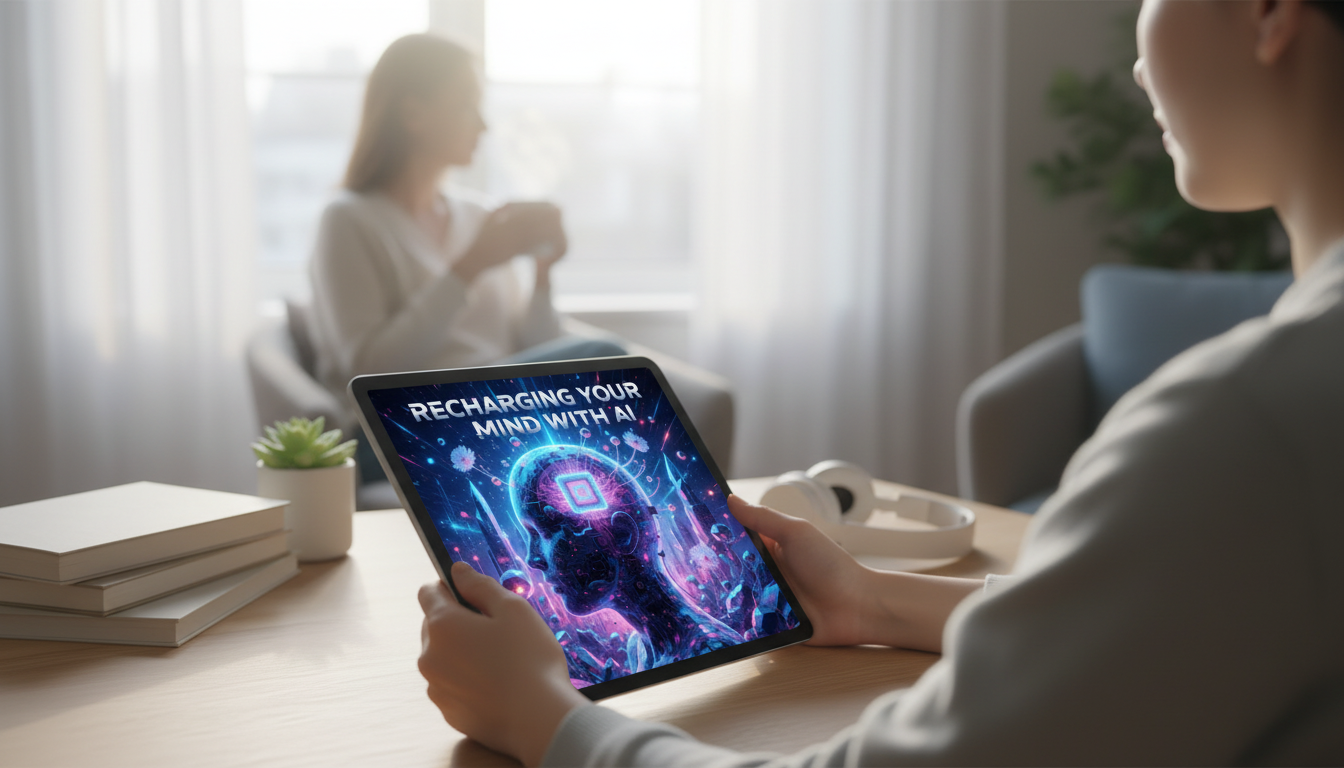
Modern life can keep attention fragmented and stress levels quietly elevated. A simple way to restore calm focus is to combine mindfulness fundamentals with structured AI support—using short, repeatable “micro-resets” that fit into real days. This guide maps out how to use AI-assisted self-care techniques to reduce digital overload, steady the nervous system, and build a sustainable mental wellness routine—without adding more complexity.
What “digital stress” looks like in daily life
Digital stress often shows up less like a single meltdown and more like a steady drip of tension: racing thoughts, doomscrolling loops, irritability, decision fatigue, and feeling mentally “full” even after rest. The tricky part is that you may still be getting tasks done—while your nervous system stays stuck in a low-grade alert state.
Why it happens: constant notifications, context switching, and information overload repeatedly nudge the brain into scanning for “what’s next.” Over time, attention becomes jumpy and recovery gets shallow. A helpful reframe is that stress relief isn’t only about doing less—it’s also about recovering attention and regulating the body’s stress response.
Quick self-check: identify the top 3 digital triggers that reliably spike tension. These might be specific apps, certain times of day, particular people/chats, or work tasks that create instant urgency.
How AI can support calm focus (without replacing mindfulness)
AI works best as a structure tool. Instead of holding an abstract goal like “be less stressed,” it can turn that goal into small, scheduled actions that are easier to follow when you’re already tired or overwhelmed.
Keep it grounded: mindfulness skills—breathing, attention training, and self-compassion—remain the core. AI simply helps you repeat those skills consistently until they feel automatic. For more background on mindfulness effectiveness and safety, see the National Center for Complementary and Integrative Health (NCCIH).
AI support vs. mindfulness skill
| Goal | Mindfulness skill | How AI can help |
|---|---|---|
| Calm the body fast | Breath + body scan | Generate a 2-minute script and reminders at high-stress times |
| Regain focus | Single-tasking + attention anchoring | Create a 25-minute plan with one priority and a break cue |
| Reduce rumination | Label thoughts + compassionate reframing | Offer gentle reframe options and short journaling prompts |
| Improve boundaries | Values-based choices | Draft notification rules and a realistic digital curfew plan |
A simple “micro-reset” system for everyday peace
Consistency beats intensity. Aim for 4–8 micro-resets per day instead of one long session you can’t sustain. If you want a guided, ready-to-use routine built around this idea, consider Recharging Your Mind with AI – Digital Stress Relief Guide for Calm, Focus & Mental Wellness (digital download).
A 7-day calm-focus plan (repeatable, low-pressure)
7-day plan at a glance
| Day | Theme | Daily action | Time needed |
|---|---|---|---|
| 1 | Awareness | Log 3 stress spikes + choose 1 micro-reset | 5–10 min |
| 2 | Boundaries | Two notification-silent blocks + breath reset | 5–10 min |
| 3 | Focus | One 25-minute single-task session + grounding | 30 min |
| 4 | Scrolling | Limit one app + swap with a movement reset | 10–15 min |
| 5 | Wind-down | Digital downshift routine before bed | 20–30 min |
| 6 | Self-talk | Write one compassionate reframe | 5 min |
| 7 | Review | Choose 2 “if-then” rules for next week | 10–15 min |
To make Day 3 (focus) easier, it helps to practice realistic scenarios and “what would I do next?” decision points. Learn Smarter with AI Simulations Checklist can support that kind of structured practice without overthinking the setup.
Practical ways to use AI for self-care (safe, supportive, specific)
- Daily check-in: ask for a 1-minute mood/energy/stress tracker format and keep it consistent for a week. The goal is pattern recognition, not perfect journaling.
- Decision fatigue relief: generate a short “today’s top 3 priorities” plan plus a “good enough” stopping rule (for example: “After 90 minutes, I ship the draft and schedule improvements.”). Chronic stress and overload are widely discussed by the American Psychological Association (APA).
- Boundary scripts: draft polite messages for delaying responses, ending calls, or setting meeting limits—then rewrite them in your natural voice so they don’t feel robotic.
- Mindful routine builder: request a morning and evening routine that includes one body reset, one attention reset, and one environment reset, each with a clear “start cue” (coffee, lunch, last meeting, brushing teeth).
- Privacy and safety basics: avoid sharing personal identifiers; treat AI as a wellness aid, not a crisis service; and seek professional help when needed. For a broader view of mental health needs, see the World Health Organization (WHO).
Stress often changes how you show up socially—shorter patience, less confidence, more second-guessing. If social pressure is one of your digital triggers (messages, group chats, meetings), Shine in Any Conversation with AI can help you build calmer, more prepared responses so conversations take less mental energy.
Turning a calm-focus routine into a lasting habit
FAQ
Can AI actually reduce stress, or does it add more screen time?
AI reduces stress when it shortens planning and decision-making, then points you toward offline steps (breathing, walking, single-tasking). Use it briefly to generate a simple plan, then do most of the routine away from screens.
What are the fastest mindfulness techniques for calm focus during a busy workday?
Slow exhale breathing, a quick 5-senses grounding exercise, a 2-minute body scan, and a single-task timer are among the fastest. The key is using micro-resets repeatedly rather than waiting for a long break.
Is this suitable if someone feels anxious or overwhelmed often?
It can help with everyday stress management and building steadier routines, but it isn’t a substitute for professional care. If anxiety is frequent, intense, or disruptive, consider reaching out to a licensed clinician for support.




Leave a comment